

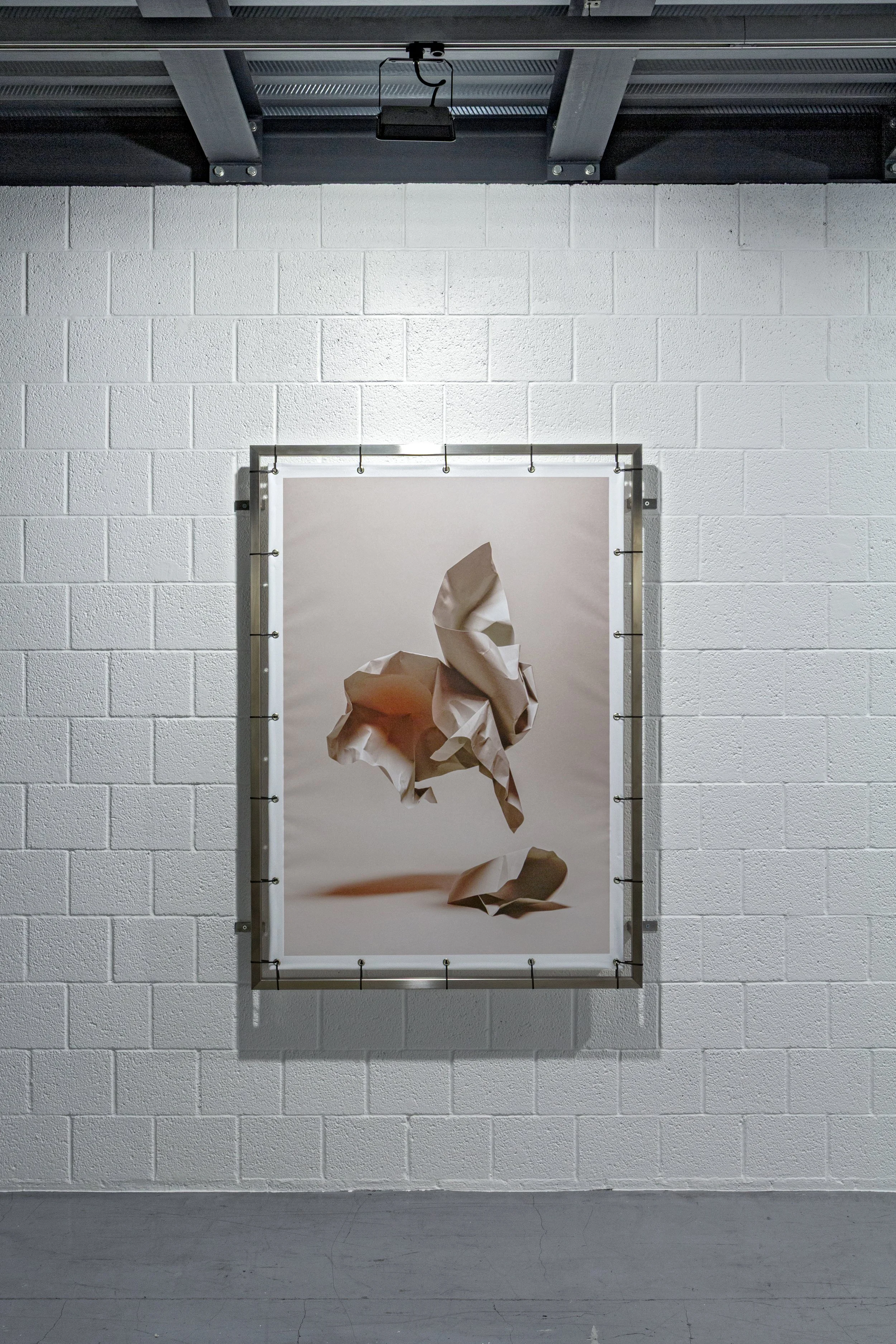
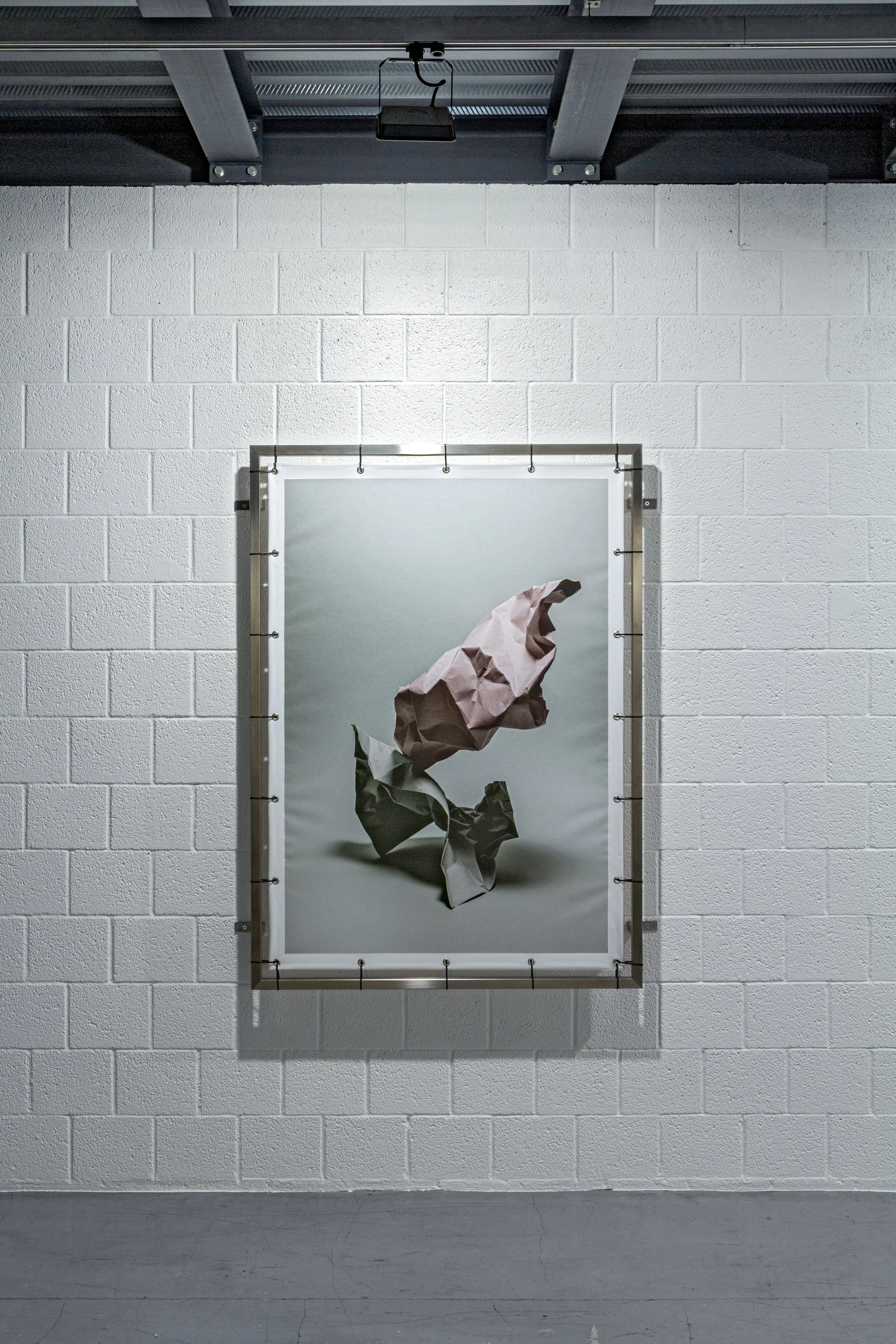
TRANSFER 15 - Photography printed on PVC, metal frame, cable ties, 110 cm x 160 cm / Gagliardi e Domke Gallery, 2026
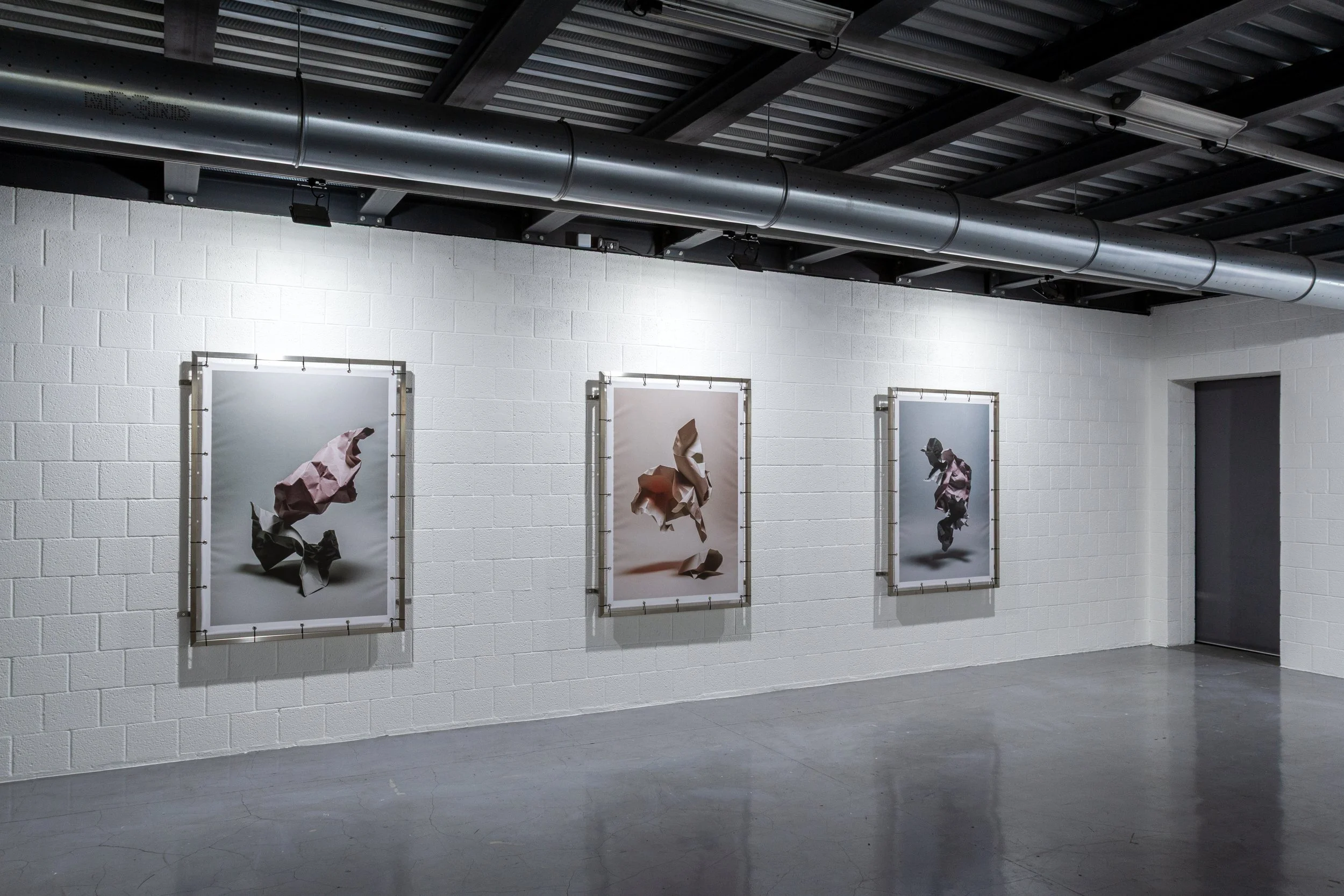
Detail view of the exhibition “ Più delle Parole” / Gagliardi e Domke Gallery, 2026
PIU’ delle PAROLE
JANDPEG
GAGLIARDI E DOMKE Gallery
Curated by Giacinto DI Pietrantonio| Turin - Italy
27.03.2025 - 08.05.2025
Nei moderni anni trenta del secolo scorso, mettendo a fuoco una questione oggi di grande attualità, László Moholy-Nagy affermava che: “Non colui che ignora l’alfabeto, bensì colui che ignora la fotografia sarà l’analfabeta del futuro.” Oggi viviamo nel mondo-iconosfera previsto da Marshall McLuhan e in quello dell’infoiconosfera puntualizzato da Luciano Floridi, dove ogni giorno vengono caricate miliardi di immagini. Non è solo una questione di quantità, ma soprattutto di qualità, come già osservava Nadar: “Nella fotografia esistono […] persone che sanno vedere e altre che non sanno nemmeno guardare”, affiancato da Émile Zola: “Non puoi affermare di aver visto qualcosa finché non l’hai fotografata.”
Nessuno, o quasi, si chiede più se la fotografia sia arte, anche perché essa si è appropriata dei linguaggi delle arti classiche e viceversa. Per questo Ansel Adams aggiunge che: “Una foto non si scatta, si crea”. Non c’è dubbio che le opere Transfer dei JANDPEG siano fotografie create e non semplicemente scattate. Tecnicamente lo sono, ma solo dopo un lungo processo creativo della cosa ritratta — un foglio di carta spiegazzato — e del modo in cui viene ritratto. Come sostiene Orson Welles: “La fotocamera è molto più di un apparecchio di registrazione…”, perché “un’immagine vale più di mille parole”.
Si tratta di questioni solo apparentemente risolte. Il rapporto tra realtà e rappresentazione è già al centro della riflessione di Platone sul concetto di mimesi, dove l’opera è vista come qualcosa di non reale. Una questione di verità, oggi centrale nel nostro tempo di post-verità. È anche un tema originario: all’inizio era il verbo, o l’immagine, o il suono? Un interrogativo che attraversa la storia dell’arte.
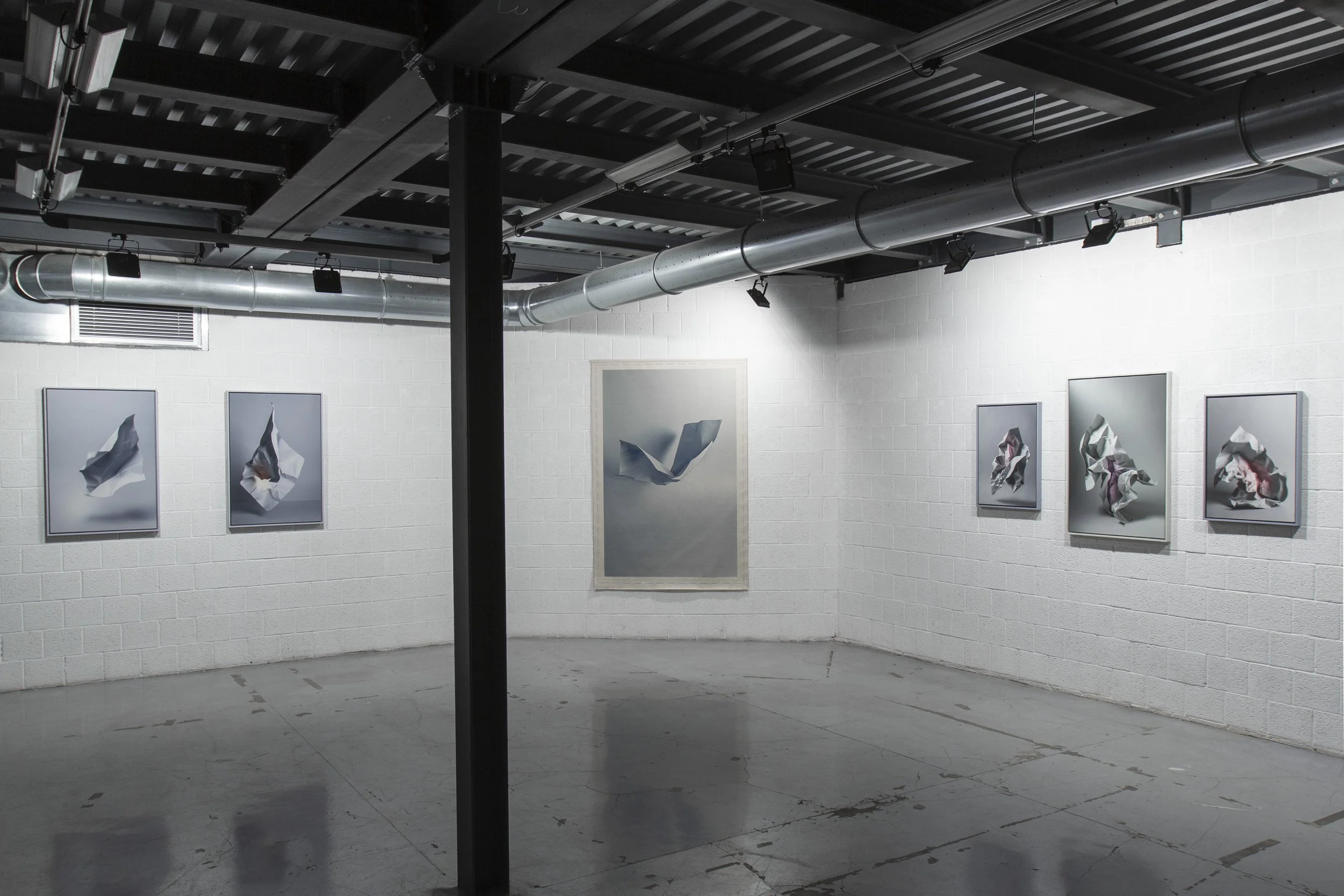
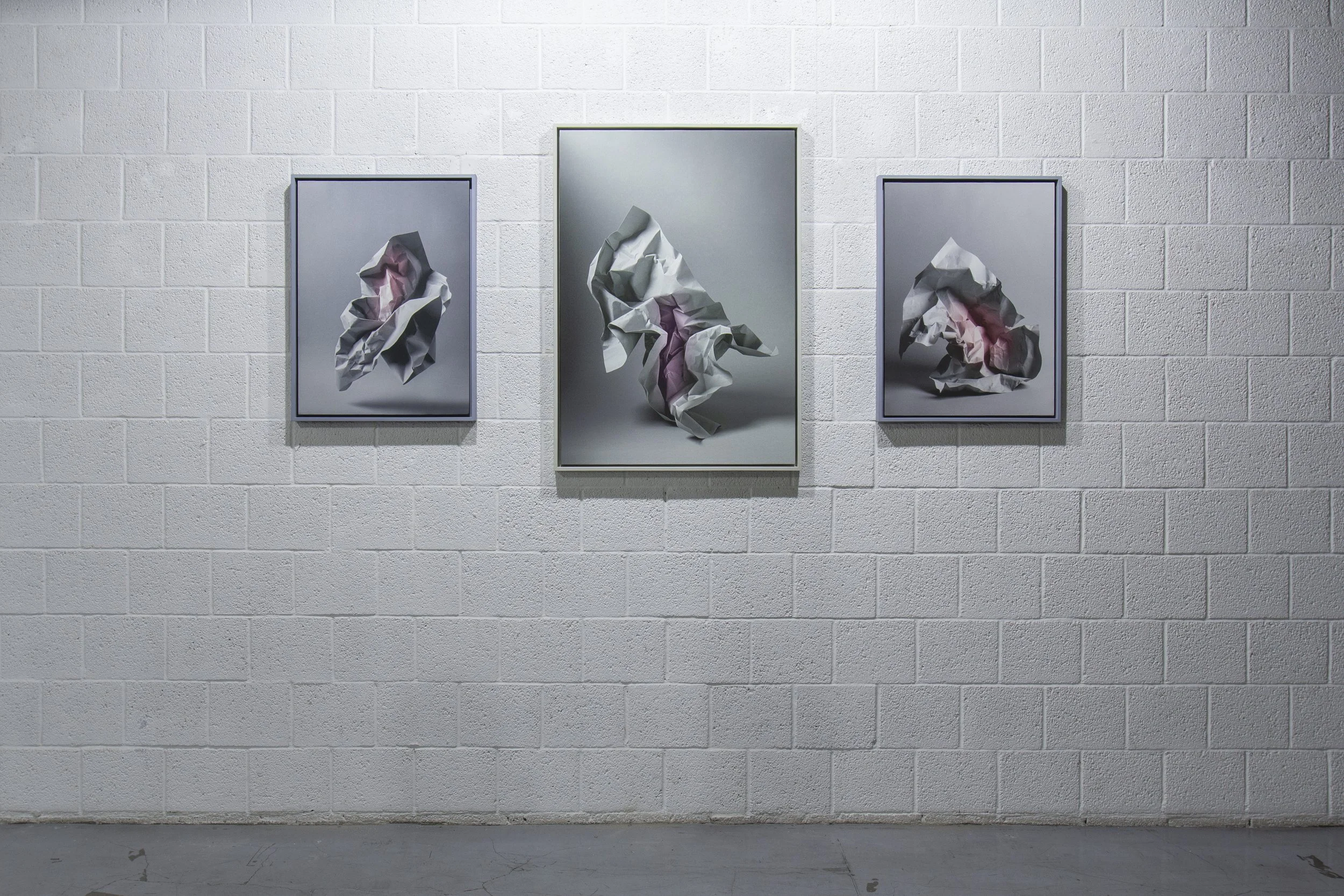
In questa tradizione si inscrive l’opera dei JANDPEG e in particolare la serie Transfer. Si tratta di fotografie non manipolate che rappresentano qualcosa di reale: un foglio di carta accartocciato. Tuttavia, ciò che appare è altro. La fotografia, diversamente dal disegno o dalla pittura, necessita dell’oggetto davanti all’obiettivo, ma con le nuove tecnologie questa distinzione si fa più complessa. I JANDPEG lavorano invece con la fotografia “classica”, mantenendo un legame diretto con il reale.
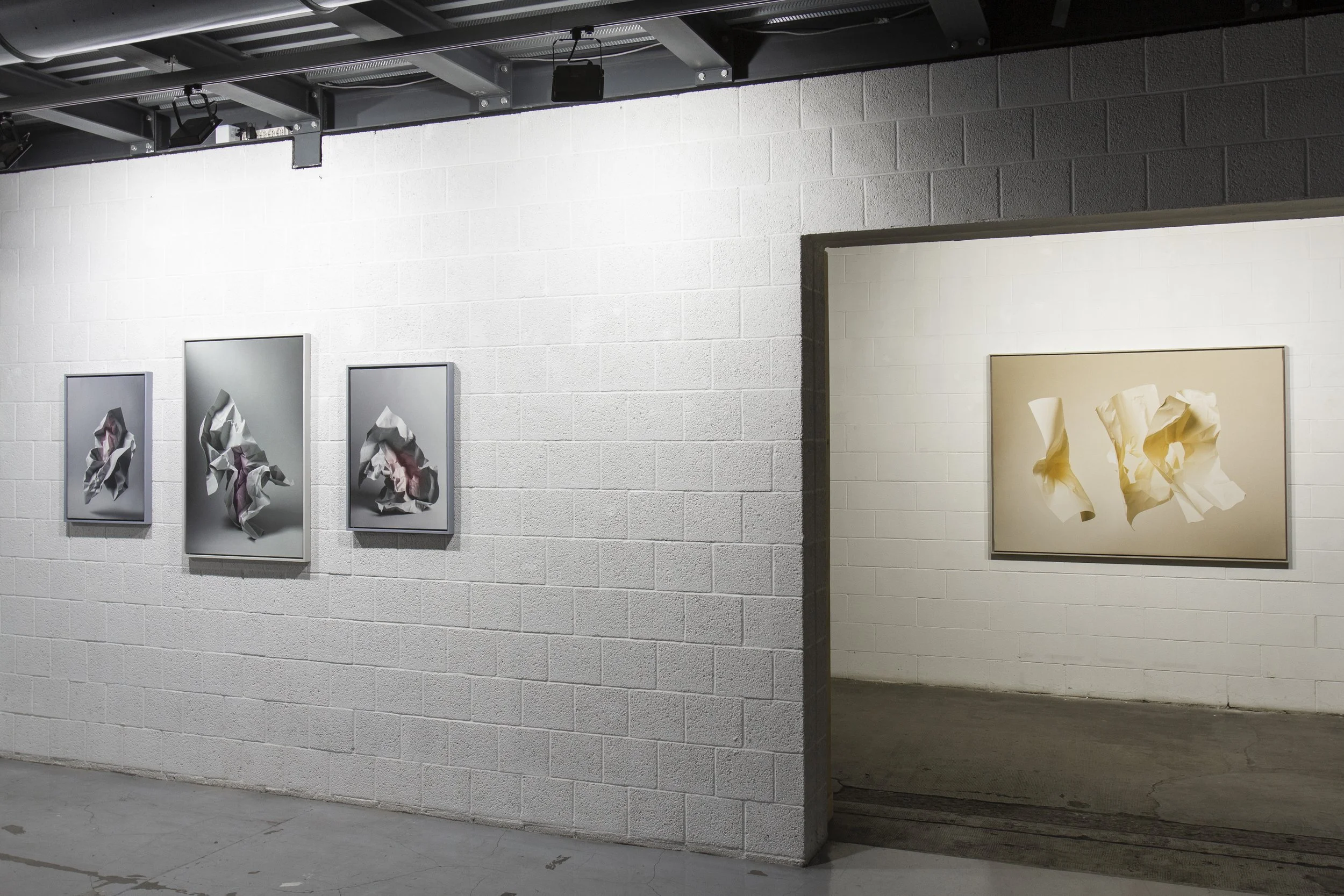
Detail view of the exhibition “ Più delle Parole” / Gagliardi e Domke Gallery, 2026
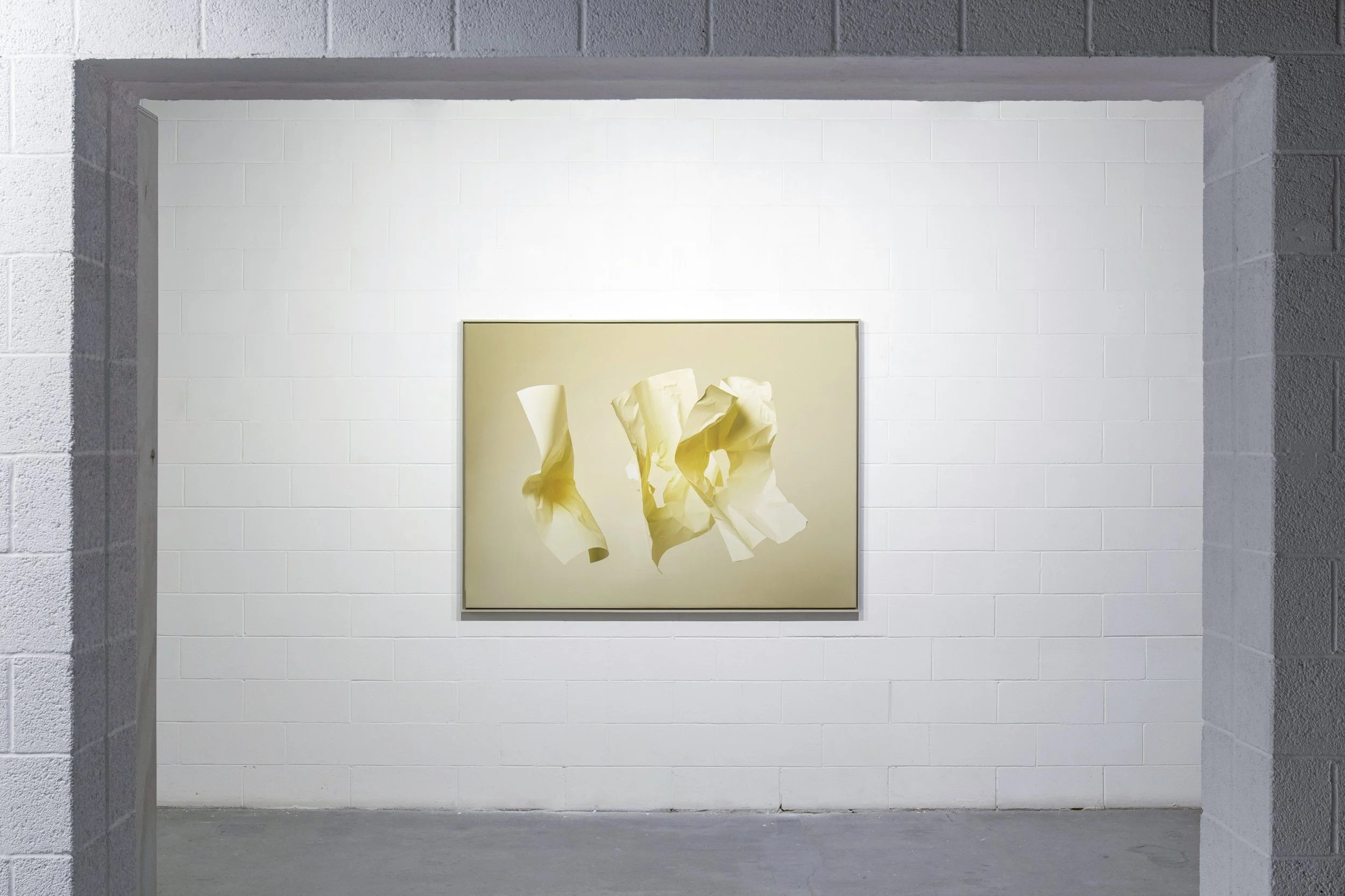
Detail view of the exhibition “ Più delle Parole” / Gagliardi e Domke Gallery, 2026
Detail view of the exhibition “ Più delle Parole” / Gagliardi e Domke Gallery, 2026
Il foglio accartocciato diventa il soggetto centrale. Esso è normalmente la base su cui scrivere o disegnare, ma qui viene negato il suo uso originario. Non è il segno di un errore concreto, ma l’idea stessa dell’errore a interessare: un foglio senza tracce, trasformato prima in forma plastica e poi in immagine. Si tratta di opere-dispositivo che mostrano come dagli errori sia possibile creare. L’errore porta con sé fragilità e fallimento, ma anche possibilità, come affermava Einstein.
Questi lavori simulano materiali diversi — metallo, ceramica — grazie all’uso della luce, che scolpisce il foglio e ne determina la forma finale. Come diceva Man Ray: “La luce può fare tutto”. La fotografia diventa così un atto di creazione.
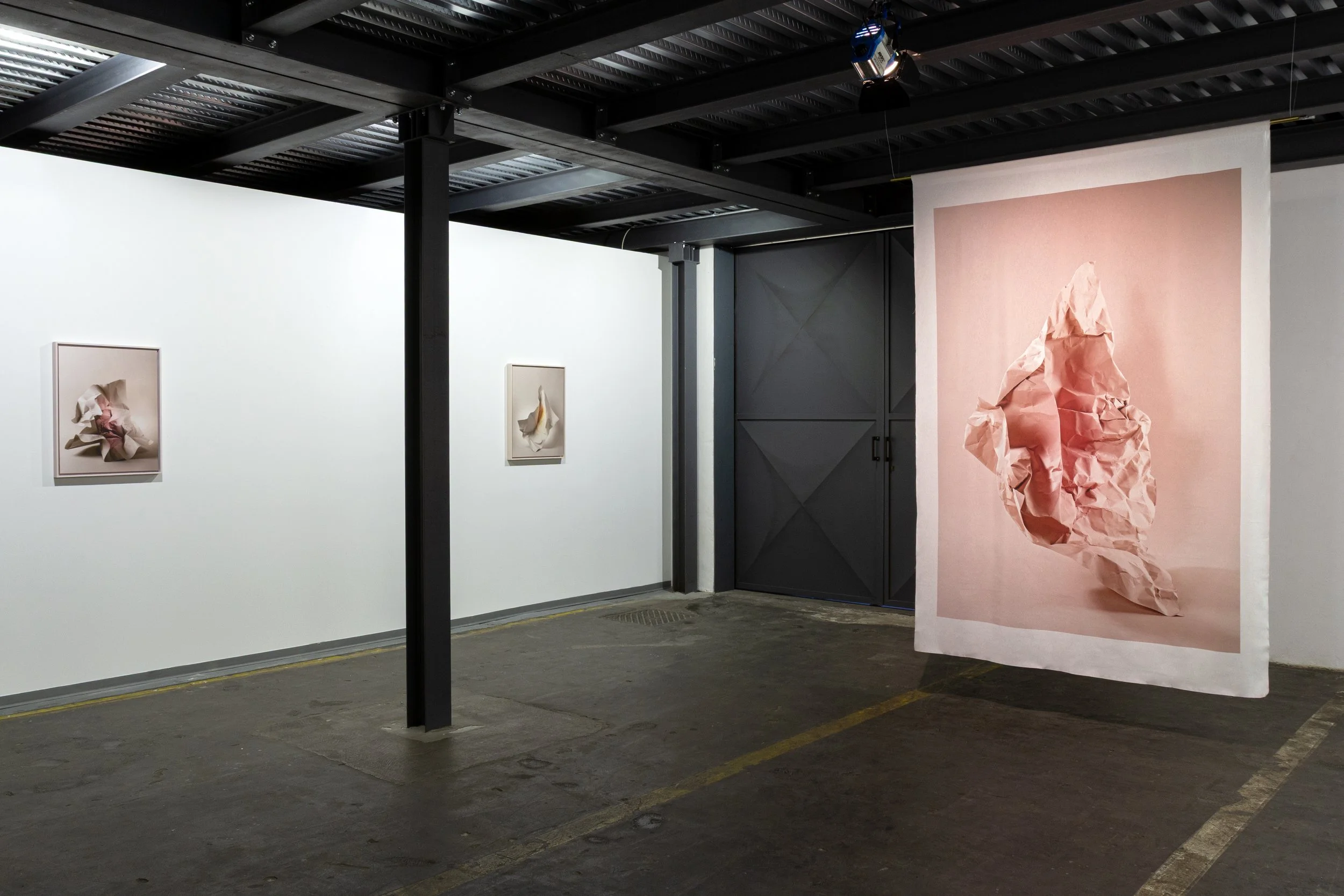
Le opere richiamano una lunga tradizione artistica: il panneggio, centrale fin dall’antichità, diventa protagonista. Le pieghe del foglio sostituiscono il corpo, e la luce ne costruisce la presenza plastica. Le immagini sembrano sospese, levitanti in uno spazio cromatico che può essere grigio, rosa o azzurro, evocando atmosfere pittoriche e rimandi alla storia dell’arte.
Il foglio di carta, simbolo di leggerezza, assume una dimensione scultorea, mettendo in tensione equilibrio e gravità. Da oggetto fragile diventa corpo plastico, trasformato dalla luce e dal colore. In questo intreccio tra fotografia, scultura e pittura, le opere dei JANDPEG riflettono sul significato dell’immagine contemporanea.
Ecco dunque il senso del titolo della mostra: l’urgenza di comprendere i segni delle immagini, nuovo alfabeto di un mondo in cui le immagini stanno prendendo il posto delle parole.
Detail view of the exhibition “ Più delle Parole” / Gagliardi e Domke Gallery, 2026
Detail view of the exhibition “ Più delle Parole” / Gagliardi e Domke Gallery, 2026
In the modern 1930s, addressing a question that is highly relevant today, László Moholy-Nagy stated: “It is not the person who ignores the alphabet who will be the illiterate of the future, but the one who ignores photography.” Today we live in the iconosphere predicted by Marshall McLuhan and in the info-iconosphere described by Luciano Floridi, where billions of images are uploaded every day. It is not only a matter of quantity, but above all of quality, as Nadar already observed: “In photography, as in all things, there are those who know how to see and those who do not even know how to look,” echoed by Émile Zola: “You cannot claim to have seen something until you have photographed it.”
Almost no one today questions whether photography is art, as it has gradually absorbed the languages of the classical arts, and vice versa. For this reason, Ansel Adams stated: “You don’t take a photograph, you make it.” There is no doubt that the Transfer works by JANDPEG are photographs that are created rather than simply taken. Technically they are photographs, but only after a long creative process involving both the subject—a crumpled sheet of paper—and the way it is represented. As Orson Welles suggested: “The camera is much more than a recording device…,” because “an image is worth more than a thousand words.”
These are only apparently resolved issues. The relationship between reality and representation was already central to Plato’s reflection on mimesis, where the artwork is seen as something not truly real. It is a question of truth, now central in our age of post-truth. It is also an original theme: in the beginning was the word, or the image, or the sound? A question that has run through the history of art.
The work of JANDPEG, and in particular the Transfer series, belongs within this tradition. These are unmanipulated photographs representing something real: a crumpled sheet of paper. Yet what appears is something else. Unlike drawing or painting, photography requires the object to be physically present before the lens, although this distinction has become more complex with digital technologies. JANDPEG, however, works with “classical” photography, maintaining a direct connection with reality.
TRANSFER 12 - Photography printed on PVC, metal frame, cable ties, 110 cm x 160 cm / Gagliardi e Domke Gallery, 2026
The work of JANDPEG, and in particular the Transfer series, belongs within this tradition. These are unmanipulated photographs representing something real: a crumpled sheet of paper. Yet what appears is something else. Unlike drawing or painting, photography requires the object to be physically present before the lens, although this distinction has become more complex with digital technologies. JANDPEG, however, works with “classical” photography, maintaining a direct connection with reality.
The crumpled sheet becomes the central subject. Normally the surface on which to write or draw, here it denies its original function. It is not the trace of a concrete mistake, but the very idea of error that matters: a sheet without marks, transformed first into a plastic form and then into an image. These works function as devices showing how creation can emerge from error. Error carries with it fragility and failure, but also possibility, as Einstein suggested.
These works simulate different materials—metal, ceramic—thanks to the use of light, which sculpts the paper and defines its final form. As Man Ray said: “Light can do anything.” Photography thus becomes an act of creation.
The works also recall a long artistic tradition: drapery, central since antiquity, becomes the protagonist. The folds of the paper replace the body, and light constructs its plastic presence. The images appear suspended, almost levitating in a chromatic space—grey, pink, or bluish—evoking painterly atmospheres and references to art history.
The sheet of paper, a symbol of lightness, takes on a sculptural dimension, creating a tension between balance and gravity. From a fragile object it becomes a plastic body, transformed by light and color. In this interplay between photography, sculpture, and painting, JANDPEG’s works reflect on the meaning of the contemporary image.
Thus the title of the exhibition is explained: the urgency of understanding the signs of images, the new alphabet of a world in which images are increasingly replacing words.
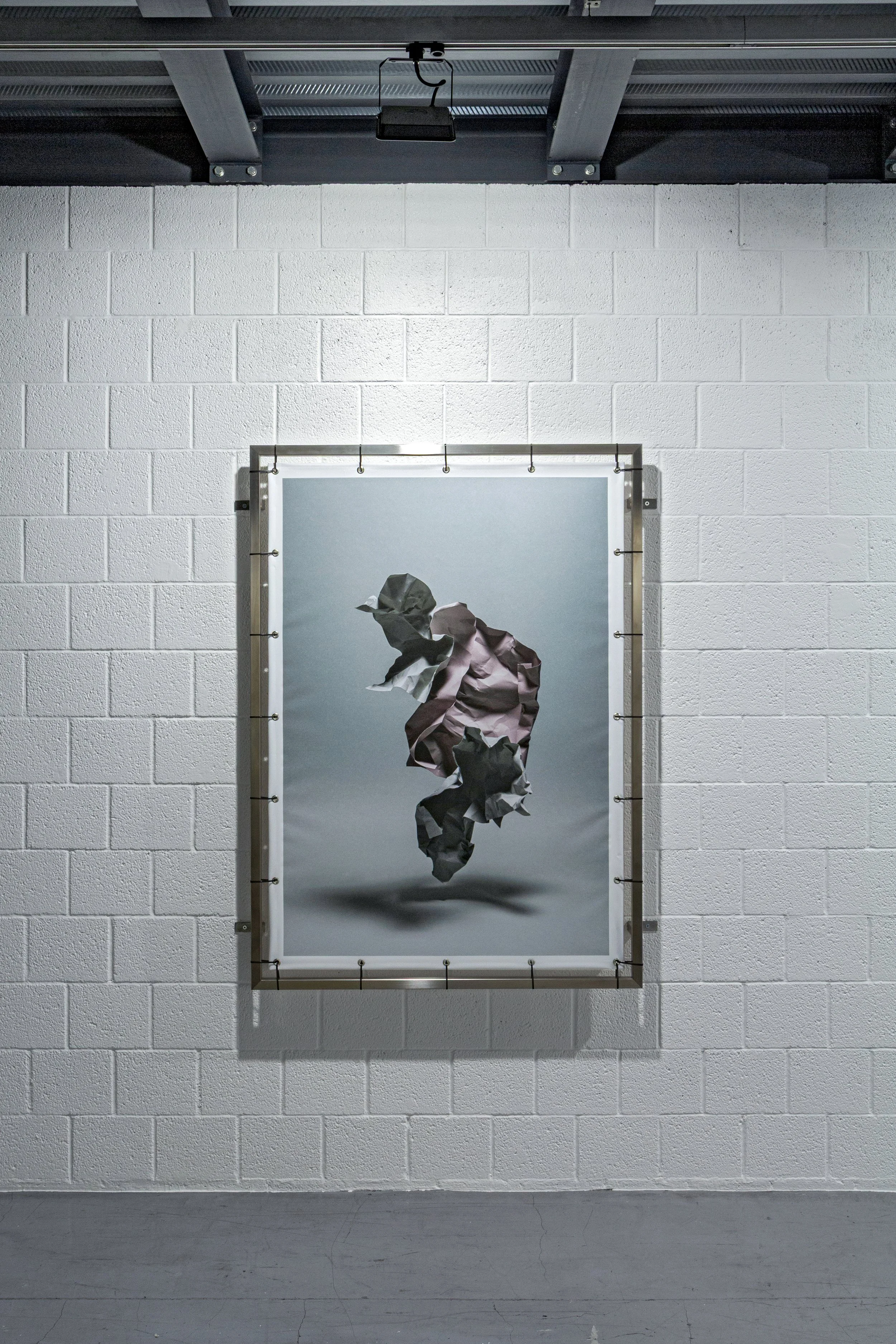
TRANSFER 13 - Photography printed on PVC, metal frame, cable ties, 110 cm x 160 cm / Gagliardi e Domke Gallery, 2026
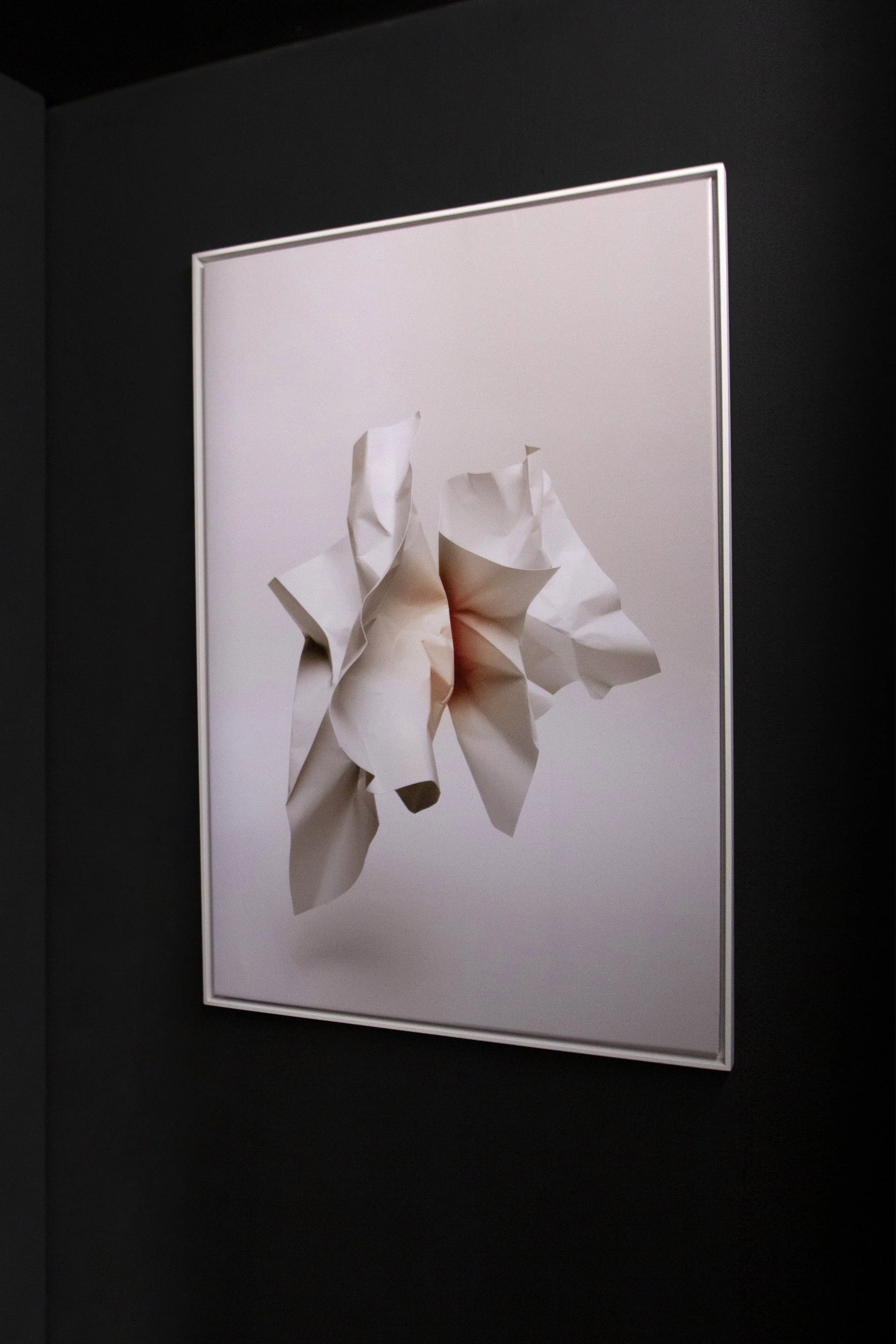
TRANSFER 131 - Photography printed on PVC, metal frame, cable ties, 100 cm x 150 cm / Gagliardi e Domke Gallery, 2026